


Consistently, surveys report that Ann Arbor, Michigan, is one of the best places to live in the USA. One factor that contributed substantially to that reputation is the dynamic arts scene in the community.
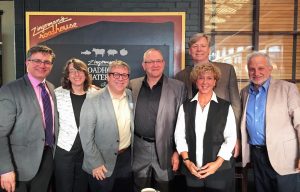
On October 20th at Robert Pasick’s Leaders Connect, I facilitated a stimulating conversation with leaders from several of the key Ann Arbor and Detroit arts institutions and businesses. The panelists were Marie Klopf, Russ Collins, Jim Fleming, Mark Clague, Marianne James, and Rick Sperling. Click here for the link https://youtu.be/jkQd1tTU7ck.
Today, you will be able to view the presentations on the video which was reported by Roger Rayle with Roger Rayle Virtual Ventures LLC (R2VIVE).
Below are three key points from each member of the panel.
Marie Klopf
President/CEO
Ann Arbor Art Center
1. It is not what we do, rather it is the result of what we do that is inspiring. As a leader of a non-profit arts and culture organization, our stakeholder is the experience we provide.
2. Sound fiscal planning that successfully positions our organizations for the next economic downturn is a non-profit leader’s responsibility.
3. The martyr syndrome is passe’, non-profit leaders must make it a priority to ensure that employees are adequately paid as professionals for the work they do.
Russ Collins
Executive Director
State & Michigan Theaters, Ann Arbor
Supported by excellent financial management and effective strategic planning, a leader must have a vision, a great “cast”, and persistence.
1. Vision: To, without ego, see possibilities just ahead of the curve of time, to understand more than what is, to glimpse what might be.
2. Casting: An excellent business “cast” (or team) can positively affect the “arc of the drama” of business and provide the opportunity to create outcomes better than the “scripted” vision of the leader.
3. Persistence: Work hard every day (with only the slightest fear of failure) investing the time and careful thought required. Zen-like, day-after-day, to achieve lasting results and, hopes are, making the world just a slightly better place for a generation or two.
Jim Fleming
Founder & President
Fleming Artists
1. I was reminded what a wonderful community this is to live and work in. Not only because of the offerings (which would be unimaginable in cities of equal size almost anywhere in the world) but also because of the interesting characters that inhabit this city (and area). The panel was first class and everyone on it was a splendid leader, and person.
2. I think Ann Arbor, and the area, needs to do a better job of telling our story when it comes to what is offered to the public as regards to the arts. We should be as well-known as an arts city as we are as a sports city.
3. The arts in Ann Arbor, as pointed out by Russ Collins, has a tremendous positive effect on the local economy. Arts events, artists choosing to live and work from here, artists creating here, all affect the quality of life in this community, as well as the lives of those who choose to visit here, if only for a day, to take in an event whether it be a show, festival, art gallery, or an art fair.
Mark Clague
Associate Dean, School of Music, Theatre & Dance
University of Michigan
1. Arts leaders certainly, but artists generally, need to learn about money, budgets, earned income, and other business tools for strategy as well as survival. Money tells us about what we value, what we care about.
2. Education is a root value of the arts in that the arts need to contribute to the public good. We should not think of art organizations as non-profits, but rather as social profits.
3. Collaboration is another core value in the arts and arts organizations should find partnerships that amplify their impact. The upcoming Porgy and Bess concert performance on February 17, 2018, is a great example of such symbiotic partnership, in this case, between the School of Music, Theatre & Dance, and the University Musical Society.
Marianne James
Executive Director
The Ark
1. A longstanding cultural organization needs to find a balance between honoring its history and focusing on its future. Hold onto the memories and experiences you’ve had with your favorite arts organizations and support them in growing and evolving.
2. Volunteers and engagement from all sectors of the community are fundamental ingredients to a healthy, successful arts organization. Support arts organizations with both time and dollars.
3. Arts organizations are not peripheral to a community but key components of both its quality of life and economic vitality. Value arts organizations for their important economic contributions as well as their stellar programming.
Rick Sperling
Founder & Artistic Director
Mosaic Youth Theatre of Detroit
1. Marketing the arts is a unique challenge today because we no longer have the city newspaper which most people read. We must work in a more strategic, innovative way to promote across a wide spectrum of the community without getting stuck only in the “echo chambers” that often exists on social media.
2. The arts are not only about enhancing the quality of life for a community. The arts also significantly leverage economic development and increased business in many other non-arts sectors.
3. Beyond the artistic programming of a particular season, it is essential for arts organizations, and their supporters, to focus significant energy and dollars towards ensuring the long-term sustainability of the organization.
Below are session links to click on from the panel discussion:
— Some insightful clips from the panelists:
https://youtu.be/jkQd1tTU7ck?t=56m5s 56:05-58:37 local gov’t funding
https://youtu.be/jkQd1tTU7ck?t=59m44s 59:44-1:01:08 SE Michigan region
https://youtu.be/jkQd1tTU7ck?t=1h1m8s 1:01:08-1:02:14 regional partnerships
https://youtu.be/jkQd1tTU7ck?t=1h2m34s 1:02:34-1:05:05 Ann Arbor as and arts (& sports) destination & impact on local economy
https://youtu.be/jkQd1tTU7ck?t=1h5m5s 1:05:05-1:05:37 80% of respondents spend money elsewhere in A2 when attending Folk Festival & Ark
https://youtu.be/jkQd1tTU7ck?t=1h7m14s 1:07:14-1:07:56 already existing art events vs an Edinburgh-like festival
https://youtu.be/jkQd1tTU7ck?t=1h7m56s 1:07:55-1:09:13 AA Art Center’s community piano
— More insights from the other leaders in the audience:
https://youtu.be/jkQd1tTU7ck?t=1h11m38s 1:11:38-1:12:46 Mary Kerr, Washtenaw County Convention & Visitors Bureau – working together & expanding media reach
https://youtu.be/jkQd1tTU7ck?t=1h13m36s 1:13:36-1:13:50 Molly Motherwell, WEMU – cultural partners
https://youtu.be/jkQd1tTU7ck?t=1h14m53s 1:14:53-1:15:42 Debra Polich, Arts Alliance – wider creative community
https://youtu.be/jkQd1tTU7ck?t=1h17m36s 1:17:36-1:19:18 Mary Steffek Blaske, A2SO – employment & importance of board member participation
https://youtu.be/jkQd1tTU7ck?t=1h19m39s 1:19:39-1:21:02 Leslie Raymond, Ann Arbor Film Festival – include stories of the “other”
https://youtu.be/jkQd1tTU7ck?t=1h25m15s 1:25:15-1:27:42 Jennifer Goulet, CreativeMany.org – creatives impact on GDP
https://youtu.be/jkQd1tTU7ck?t=1h29m1s 1:29:01-1:29:28 Tom Bray – “Is the business doesn’t work, the art doesn’t happen”
https://youtu.be/jkQd1tTU7ck?t=1h29m30s 1:29:30-1:33:59 final takeaways
Rob’s new book, JOURNAL for Self-Aware: A Guide for Success
in Work and Life. Link here.