


On the climate crisis, I think we’re in for a hard ride for maybe half a century. Then I see this point at which we either really fail or we start to succeed. I think the succeed side has a very good chance because of the amount of human intelligence at work. There has never been more intelligence on the planet than there is now. Not only because there’s more brains than ever but there are also augmentations of brains. There are more connections among all these brains. We’re in a sort of intelligence explosion. I hope.
In November, Rob Pasick’s Leaders Connect hosted Danny Ellis, CEO of SkySpecs. His presentation demonstrated the power of a team of intelligent young people to create solutions to help our world succeed at solving the climate crisis. Here is a summary of Danny’s talk. To view the complete video click here.
-
Going into his senior year as an aerospace student at the University of Michigan, School of Engineering, Danny realized he had never built anything that flew, so he built a drone for his senior design project.
-
As Danny’s project was not complete by the time he graduated, his professor encouraged him to apply for grad school.
-
Danny got enrolled in graduate school and becomes a graduate student instructor.
-
Based on his research, The Center for Entrepreneurship encouraged Danny to start a business.
-
Danny stated that their original project was the backward way to start a business: “a solution looking for a problem, rather than a problem looking for a solution.”
-
In 2012, the team initially started using drones to inspect large infrastructures but at the time, it was commercially illegal to fly drones.
-
An advisor encouraged the team to compete in the University of Michigan Ross School: Michigan Clean Energy Venture Challenge
-
Since he did not view the product as clean energy, Danny was first reluctant to enter. The advisor suggested to Danny he could use the technology to inspect wind turbines.
-
Danny and his team won first place. From this victory, they decided to start a business.
-
Danny realized they were really bad about sticking to their own deadlines, so they found a wind conference in Germany to become their deadline for their launch of the world’s first automated robotic inspection of turbine blades and to go with a live demonstration at the conference.
-
They ended up finishing the project six weeks early which was the first time the team was ever ahead of a deadline.
-
On the day of the demo, there were 25 mile/hour winds at the site. They had only tested the drone in 15 mile/hour winds. However, the original design was engineered to withstand 32mile/hour winds. While In theory, it should work.
-
The team was skeptical about launching the product but Danny stated, “if it doesn’t work in the wind, what are we doing in the wind industry?”.
-
After the demo, they showed the audience the data from the inspection and a week late they signed a contract with Siemens who at the time had the world’s largest manufacturer of turbines.
-
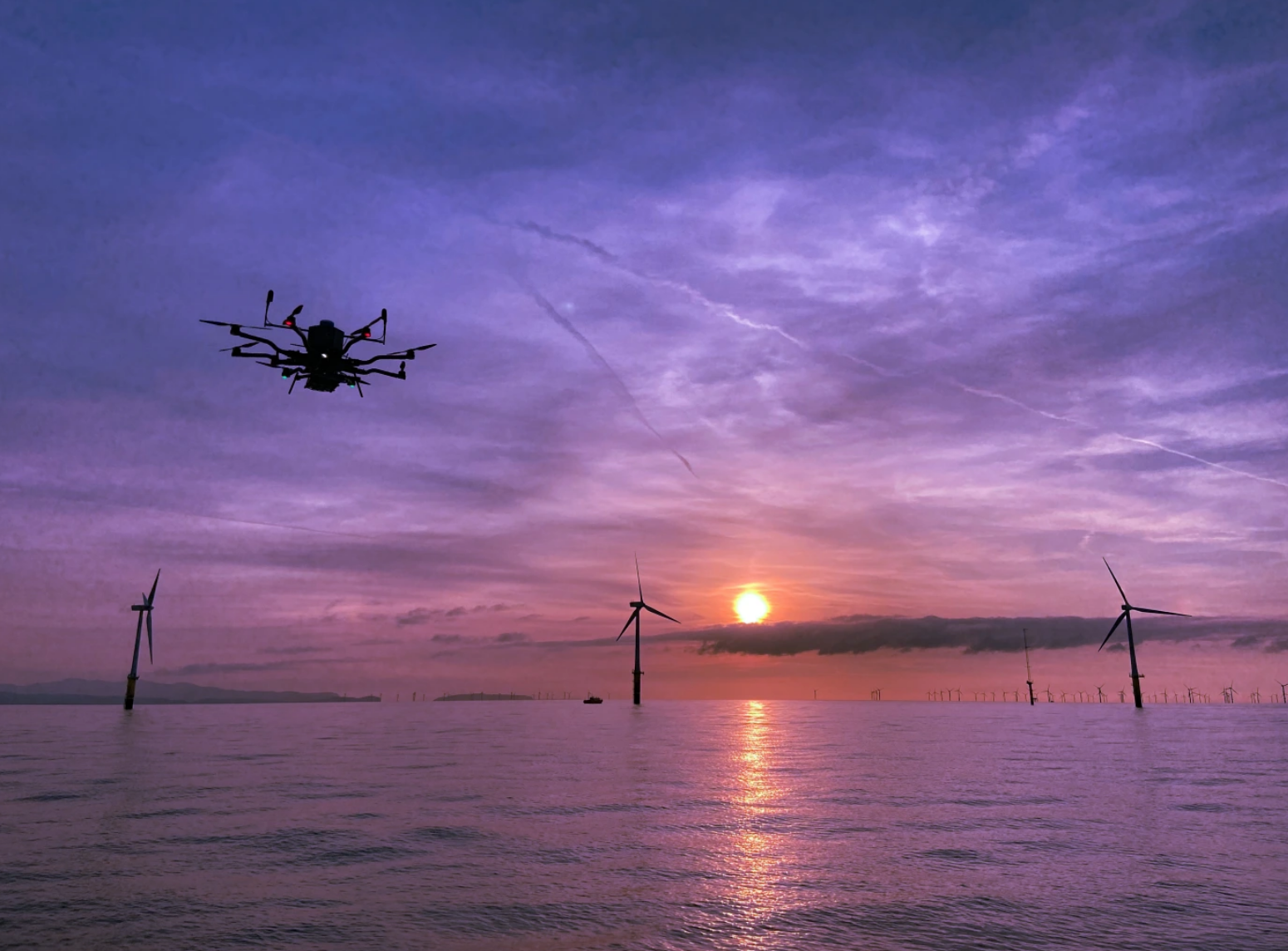
Siemens needed their product to launch in the middle of the ocean in four months. The team delivered, and SkySpecs succeeded in the launch off a boat in the North Sea in four months.
-
One blade for an offshore turbine is the length of a football field including the endzones (in a short time offshore wind turbines will become ever bigger).
-
After the press release about SkySpecs work with Siemens went live, a client in Iowa needed 900 turbines inspected. But SkySpecs did not have the workforce (no pilots, no field operations) to deploy this. The team packed up their equipment and called old friends from the University of Michigan because they were experienced drone pilots.
-
They executed inspecting all 900 wind turbines in 2 weeks
-
Their first customer had no idea that they were SkySpecs first customer. They thought they had been around for years.
-
SkySpecs excelled at taking photos of turbine blades, to get a shot of the tip of a turbine was an extreme focus. You could not get more niche than. This focus let SkySpecs shine in that specific area, while other drone companies were trying to be in 20 different markets at once.
-
In 2018, Danny realized that it was not just about the drones or the inspection of the blades, it was about letting the customer know what to do next. How to maintain their fleet and how to prevent their billion-dollar investments from falling over.
-
In 2018, SkySpecs stopped calling themselves a drone company and started to focus on being a wind company, that uses robotic automation to extend the life of these assets.
-
Going forward their focus was to create a list for the client to understand how to extend the life of these assets.
-
When the pandemic hit, SkySpecs boomed since others were not allowed to travel to their sites, SkySpecs would go out to inspect their businesses for them.
-
Starting with three people in Danny’s basement, SkySpecs has grown to 250 employees globally, offices in Europe, India, and America, and working in 31 countries.