


- Recently, I have been asked to provide brief (one or two) session consultations to leaders and coaches about crucial issues they are facing in the workplace. As a result, I now am including these brief consultations as part of my portfolio of services, which includes: LeadersConnect, Executive Coaching, Next Steps Groups, and Men’s Groups.
- Within the next few weeks, I will be launching my new book, Men: A Guide to Healthy Aging: 365 Ideas for Staying Strong in Mind, Body, and Spirit. I am inviting you to be an advanced reader of the book and to write a review of it for Amazon. If you would be interested in receiving a free copy of the book, please let me know.
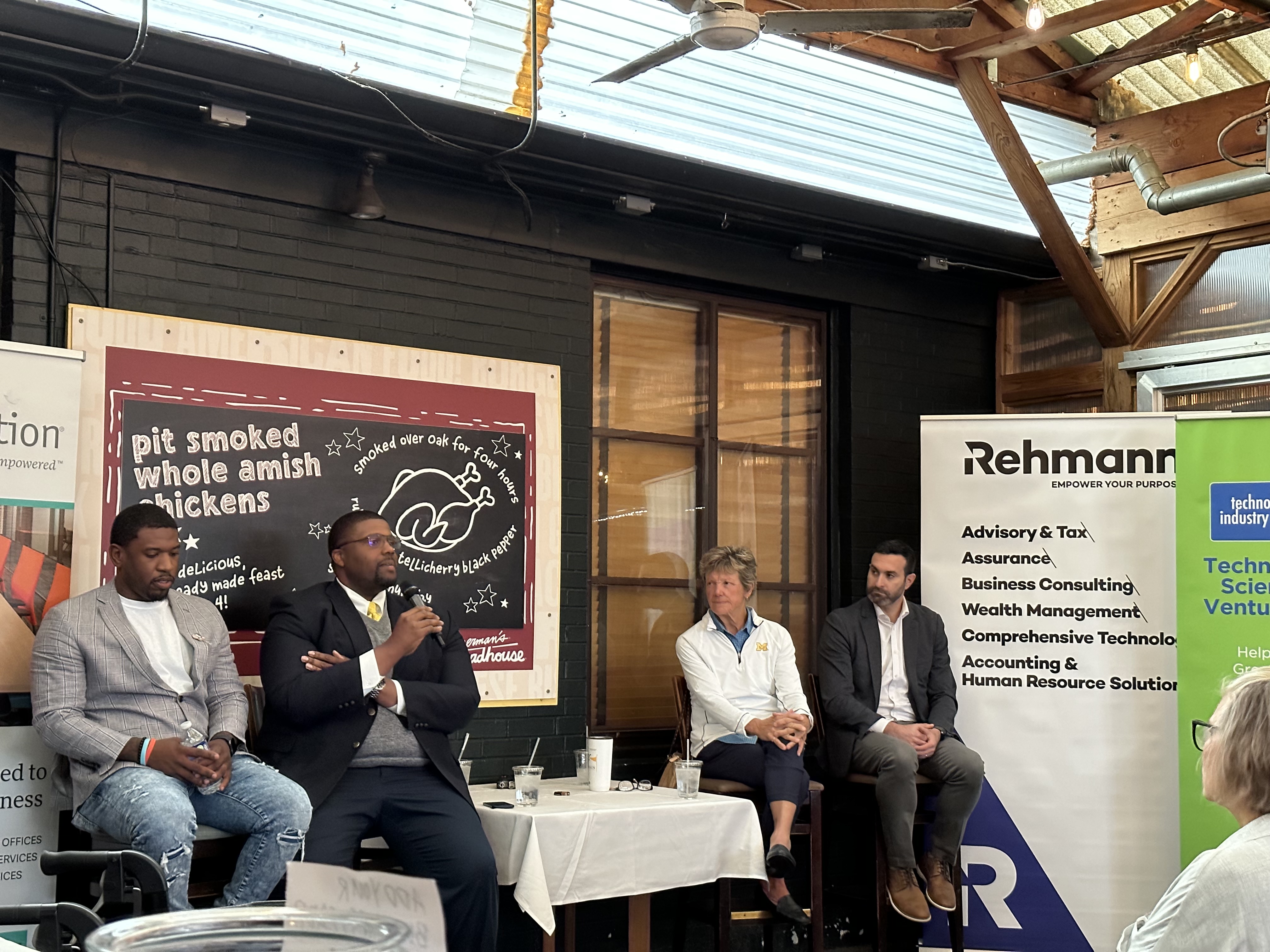
We were privileged to have four extremely knowledgeable and experienced panelists to address the question, “What is the future of college sports?” Here is the link to the presentation on my YouTube channel. Below, you will find some of the highlights of each of the individual presentations.
Jordan Acker, Regent of the University of Michigan:
- The policy world and the athletic world are now connected in ways that they have never been before.
- Decisions about the future of college sports are not only going to be made by athletic directors and presidents, but also by legislators across the country and federal judges.
- Name, Image, and Likeness (NIL): This is a new market, and we do not have all the answers. A recent article in the New York Times highlights one of the dangers: a way for wealthy donors and fans to pay players with hardly anything expected in return.
- Jordan recently wrote an op-ed piece in the New York Times about the challenges in intercollegiate sports. Read the article here.
Carol Hutchins, Legendary University of Michigan Women’s Softball Coach:
- Carol described how in high school, she played after-school “girls’ athletic activities” since women’s sports were not at an organized level until her senior year.
- “When you are in the midst of this evolution, you are just happy to be included. I was excited to be an athlete at Michigan State.”
- There was much uncertainty in the 80s about Title IX. It said nothing about sports. Women’s sports were an unintended consequence.
- Less than 30% of students were women on campus; less than 10% were faculty; less than 5% were in STEM fields; and only 5% of women went to law school. Today, women are in the majority in most universities, law schools, and medical schools.
- “The most important thing we do in college athletics is to educate our students.”
- “The number one goal as a coach is for the players to graduate.”
- The best classroom on campus is on the athletic field. The lessons that students learn there can be more important than those learned in chemistry or economics.
- All my players come back and say, “You wouldn’t believe how unprepared for work are the people out there in the work world.”They could never play for you. They do not know how to function; they do not have any leadership skills.’ That’s why we proudly wear the block M.”
- Out of the 960 student-athletes, over half of them have a GPA of 3.0 or above.
Claiborne Green, Director of Football Administration and Student Services:
- There are challenges for the players in determining when to utilize their NIL in their everyday lives. This could mean figuring out when to do an autograph signing versus attending class.
- Ensuring that there is a positive culture in place on the football team is crucial to its success.
- It is essential to make sure that players’ egos do not get in the way of the team.
- “To take full advantage of NIL opportunities, we have to hold them to the highest standards.”
- The department is assisting athletes in understanding taxes, W-2 forms, and making appropriate financial decisions.
- NIL has compelled the department to be more intentional about preparing student-athletes for the real world.
Karan Higdon, Former University of Michigan Football Captain:
- “Remember: There is life after football. Make sure you stay on top of your grades and participate in extracurricular activities since you never know what might happen.”
- “I had the security of creating a vocational foundation before leaving the university.”
- It’s been three years since I left, and having that foundation has set me up for success in the work world.
- NIL benefits college athletes across the board and provides them with a sense of security.
- Having a stable foundation is crucial because you never know when your athletic career might come to an end.
- Most college football players never have the opportunity to become professionals. For those who make it to the NFL, often their playing career is very brief. We say that NFL means “Not For Long”.